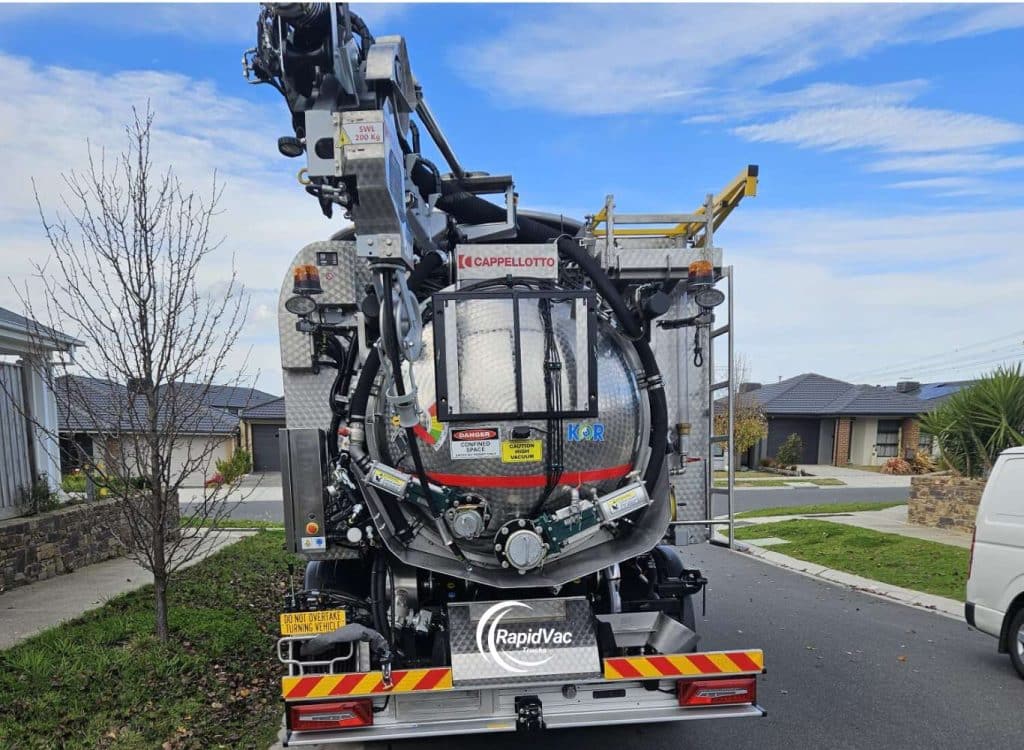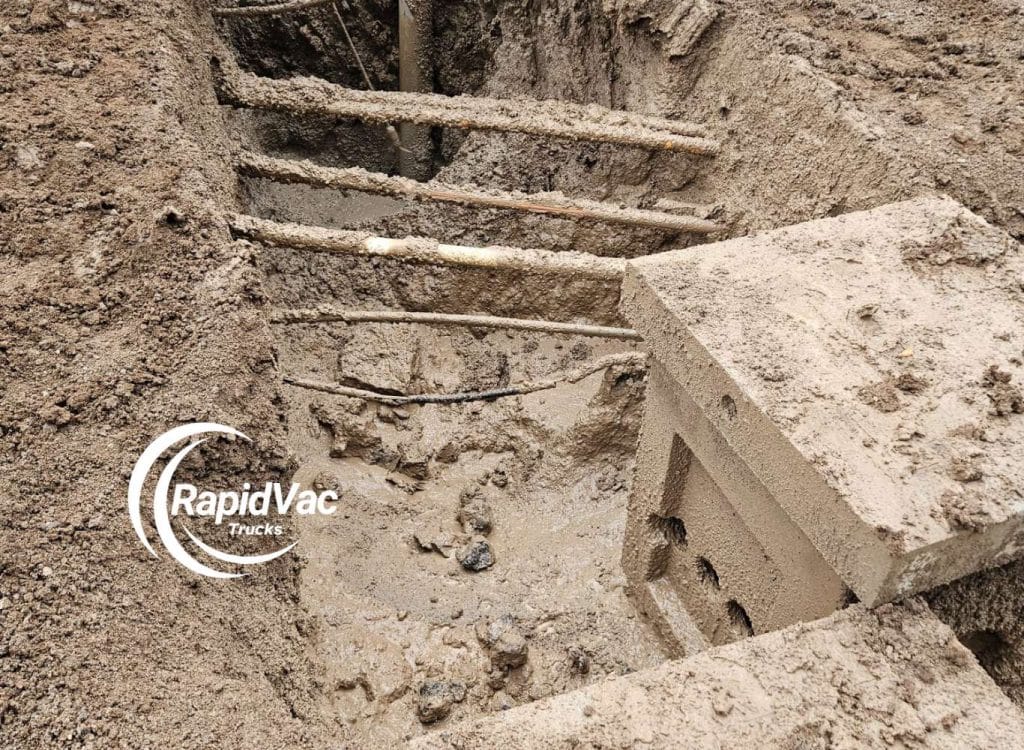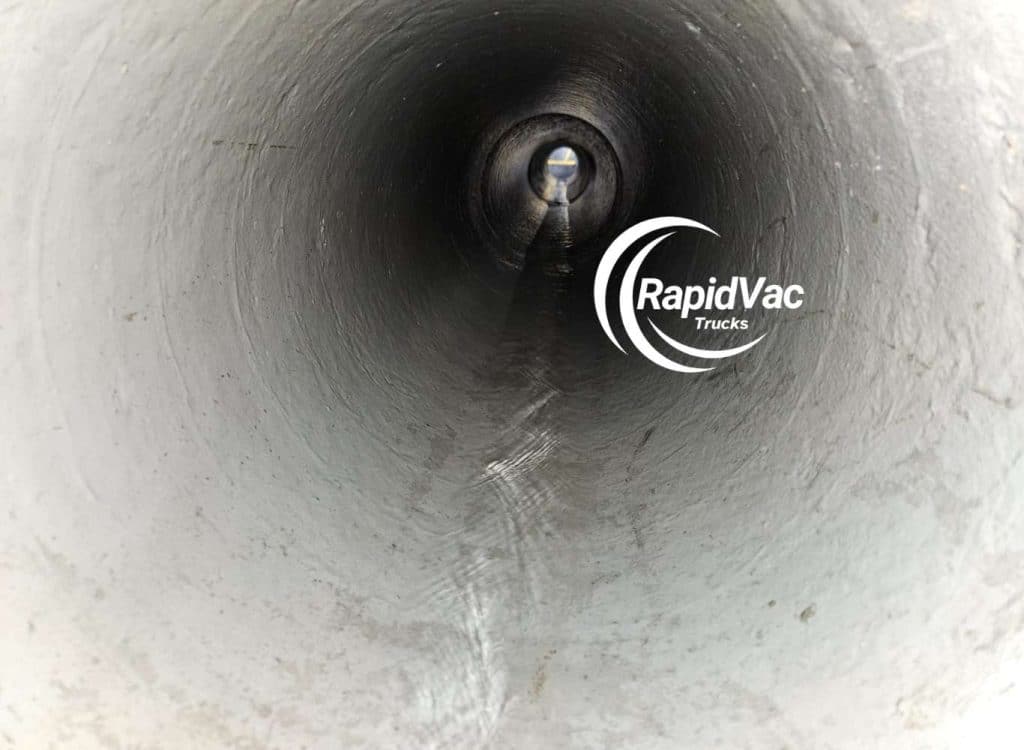
Hydro excavation uses pressurised water to loosen soil and a vacuum to lift it out, so a buried pipe or cable can be uncovered and seen rather than assumed. For a plumber, its main role is physical exposure: confirming where an existing service actually sits before you cut, connect or replace pipe near it.
It's a form of non-destructive digging, but it isn't a guarantee. Exposing a service shows you what's in the hole you open. It doesn't find faults, inspect a line with a camera or repair anything, and it can't account for services you haven't uncovered.
What Is Hydro Excavation Used for on a Plumbing Job?
Plumbing work often depends on a service that's already in the ground, such as an existing sewer or stormwater line, a water connection or a junction near the boundary. Plans and locating equipment help you work out where to look. Exposure lets you see the service itself at the point that matters for your job, including how deep it sits there and its position relative to your planned dig.
That's the practical value of hydro excavation for plumbing. It replaces an assumption with something you can see at a specific spot. It doesn't tell you what the line does a few metres away, and it doesn't replace the asset owner's own requirements.
Plans, Electronic Locating and Exposure Tell You Different Things
Before You Dig Australia's guide How to get free plans says its plans indicate the presence of underground infrastructure only, not its exact location. The same guide refers to potholing using the asset owner's stated method.
Water Corporation draws a similar line for its own pipelines. Its Locating our assets page says plans give the approximate location of its assets, describes electronic detection used together with potholing, and states that potholing is the only way of determining pipeline location with certainty.
Put simply, plans tell you a service is likely to be there, electronic locating helps narrow down where, and exposure confirms it. Each asset owner sets its own requirements for work near its assets, so follow the instructions that come with your plans rather than a general article like this one. For related information on finding services before digging, see our service locator page.
When a Vac Truck Exposure Enquiry Fits Your Plumbing Job
It's most relevant when the next part of your work depends on knowing exactly where an existing service sits, for example when you're:
- replacing a section of pipe that runs close to other services
- connecting to an existing sewer, stormwater or water line
- working near a boundary junction or riser that your plans don't clearly show
It's less relevant when the job you need done is fault finding, a camera inspection or the repair itself. Exposure can open up access to a pipe, but those tasks remain separate work.
For more about the service, see our vacuum excavation page.
What Plumbers in Perth Can Include When Asking About a Job
The quote form has five required fields: your name, phone, email, address and a message. Beyond what those fields ask for, the details below are optional, and sending them doesn't confirm that a job is suitable. They do help the first conversation start with the right facts:
- where the job is and what plumbing task the exposure is for
- any plans or service information you already have, such as your BYDA plans
- access constraints, such as driveways, gates, tight side access or how close vehicles can get
- when you need the work done, including any fixed work window
The contact page form has an optional field for photos or a site plan if it's easier to show the site than describe it.
Book Your Job With Rapid Vac Trucks Perth
Call (08) 5122 6099 any time to arrange the work, with 24/7 service and on-site attendance, or send the details through our quote form.
If you'd like to look us up before you call or send the form, you can view our Perth profile.